ApprovedNew York Magician Party magic show Frank Paris, <pre id="line1"><span class="attribute-value">magic, illusion, magician, conjuring, tricks, theater, performance art</span></pre> magician Manhatten, New Jersey, Connecticut, Wantagh, New York, Magician Long Island, magician nassau, suffolk c
left curtain

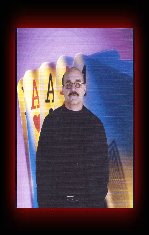
Frank Paris 

Professional Magician

PO Box 7657 Wantagh, Long Island New York 11793   Phone 516 826 3806

I continue to build my Client List through referrals and realize that a referral is the highest compliment one can pay to a Magic  professional.  I would welcome a referral from you.

Questions  email voyant1@optonline.net

We accept http://www.frankparis.com Magician credit cards

Want to take magic lessons email us at : voyant1@@optonline.net

Learn: Close-up, stage, illusions, comedy, escape, and Mentalist Magic

 "The world is divided into two classes, those who believe in the incredible,

and those who do the improbable." 

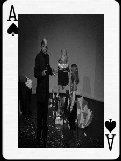
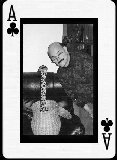
  Frank Paris is a nationally performing Magician based in the New York City area.

Stage Shows . Close-up Magic  .  Walk - Around - Magic .

Illusions  .  Escapes  . Mentalism   


America's funniest Comedy Stand up Prop Magician

Corporate Functions . Private Parties . Trade Shows. Cruise Ships

With Frank Paris providing your  Magical Entertainment, You Will…

Reach Your Customers, Stop Traffic,
Gather More Qualified Leads,
Educate Your Clients, Maximize Your Visibility,
Blow Your Competition Out Of The Water!

“With over 25 years  of  Performing  Experience”

Corporate Entertainment

From intimate corporate meetings, conventions and banquets, to the showrooms of Las Vegas, Frank Paris provides professional and dynamic performances that are guaranteed to transform any event into a memorable and inspirational experience.

Private Gatherings And Parties

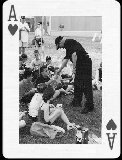
Frank’s unique style of strolling or close-up magic allows your audience to experience magic on an intimate level.  This is done while he walks from audience to audience, ranging in size from one individual to small groups of  ten or so,  performing miracles using cards, coins, ropes, ‘borrowed’ watches, rings, and whatever other items he can get his hands on.   Most of the illusions occur in the hands of the participants and allow the audiences to take part in the art of magic as they never have before.

Magical comedian (magician + comedian)

Frank Paris is "America's Magical Funnyman"   a creative comedy entertainer who blends OFF-BEAT visual magic effects and UNBELIEVABLE stunts with CLEAN comedy, and HILARIOUS audience participation to create an interactive show that gets audiences involved.  Whether you want an evening of corporate comedy entertainment and fun for your convention event, Frank's  award-winning comedy magic performance can be easily adapted to fulfill your entertainment goals...and fill your room with laughter and applause.
  

With a successful track record, Frank is THE ENTERTAINER TO CHOOSE when your entertainment decision is important.

Some Of Frank's Corporate Clients include:

Bally's Resort and Casino, The Tropicana  Harrah's  

Catch A Rising Star Comedy Club Sony Corporation

Exxon, Texaco, Mitsubishi  Bristol-Meyers, IBM,  Kroger  Foods,

Dow Chemical, H&R Block, Ortho Pharmaceutical, Microsoft, H&D Transmissions,

AT&T, Bell Labs.


Frank's Magic Venues:


Walk-Around (Close Up)
Frank Paris will approach individuals and small groups with Spoon Bending effects, Visibly change dollar bills into 5 dollar bills, vanish coins in mid air, and telekinetic feats of magic wherein things like sharpie markers jump into glasses and  move all by themselves.

Stage Show
The Stage Show typically follows a dinner. Frank Paris will invite audience members to the stage to assist him in several different types of tests. The role of the audience volunteer is basically to concentrate on thoughts Frank Paris might suggest or thoughts of the volunteer, and to report to the audience the accurateness of the exercise. He read individual minds of the audience as a whole, either from the stage or the house floor. This is extremely effective. Comedy Magic is another venue as Frank will have fun with his audience asking them to participate in unusual and funny magic stunts.

Hospitality Suite
Many organizations host hospitality suites at conventions and trade shows, featuring Frank Paris performing at specific hours, usually at the end of the business day. This format has proven to be such a benefit several corporations have been using him for over a decade. The most effective types of tests are of the Walk-Around type although, given the circumstances, anything is possible.

Trade Show Booth
 Frank Paris has become quite popular as a Trade Show performer. He is termed a "traffic stopper". His function is to draw attention to the client booth, bringing potential customers into the booth. Once again, he has clients that have considered him an effective member of their marketing team for many years. The tests in this format are a cross-section of all the disciplines, as well as an integration of client product message.

Multiple Impact Opportunities
Flexibility and adaptability are constant themes in our discussion of Frank Paris. We emphasize his ability to you to maximize your entertainment investment dollar. Organizations that participate in events that occur over several days, venues, and formats, (conventions, conferences, and trade shows), take full advantage of these attributes while minimizing talent costs and related travel and production expenses. Frank Paris can perform in any or all of the previously mentioned options, based on the needs of the group and particular function.

  If you need entertainment that is unique, fun and absolutely unforgettable, don't settle for that same old song and dance! Use your head - and let your guests use theirs! Give them something to think about - the rare gift of laughter and amazement, wit and wonder, for an occasion they'll be talking about long after the lights are out and the party's over!


Call: 516 826 3806

Questions  email voyant1@optonline.net
 

http://www.frankparis.com Magician credit cards

Magicians and Magic history

Magic, also known as prestidigitation and conjuring, is the art of entertaining an audience by performing illusions that entertain, baffle and amaze, often by giving the impression that something impossible has been achieved. Yet, this illusion of magic is created entirely by natural means. The practitioners of this mystery art may be called magicians, table magicians, close up magicians, conjurors, illusionists or prestidigitators. Artists in other media such as theatre, cinema, dance and the visual arts increasingly work using similar means but regard their magical techniques as of secondary importance to the goal of creating a complex cultural performance.

Magicians

Performances we would recognize as conjuring have probably been practiced throughout history. The same ingenuity behind ancient deceptions such as the Trojan horse would have been used for entertainment, or at least for cheating in gambling games, since time immemorial. However, the respectable profession of the illusionist gained strength during the eighteenth century, and has enjoyed several popular vogues.

Modern entertainment magic owes much of its origins to Jean Eugene Robert-Houdin (1805-1871), originally a clockmaker, who opened a magic theatre in Paris in the 1840s. His specialty was the construction of mechanical automata which appeared to move and act as if they were alive. The British performer J N Maskelyne and his partner Cooke established their own theatre, the Egyptian Hall in London's Piccadilly, in 1873. They presented stage magic, exploiting the potential of the stage for hidden mechanisms and assistants, and the control it offers over the audience's point of view. The greatest celebrity magician of the nineteenth century, Harry Houdini (real name Erich Weiss, 1874 - 1926), took his stage name from Robert-Houdin and developed a range of stage magic tricks, many of them based on escapology (though that word was not used until after Houdini's death). The son of a Hungarian rabbi, Houdini was genuinely highly skilled in techniques such as lock picking and escaping straitjackets, but also made full use of the whole range of conjuring techniques. Houdini's show business savvy was as great as his performing skill. In addition to expanding the range of magic hardware, showmanship and deceptive technique, these performers established the modern relationship between the performer and the audience.

In this relationship, there is an unspoken agreement between the magicians and the audience about what is going on. Unlike in the past, almost no performers today actually claim to possess supernatural powers. It is understood by everyone that the effects in the performance are accomplished through sleight of hand (also called legerdemain), misdirection, deception, collusion with a member of the audience, apparatus with secret mechanisms, mirrors, and other trickery (hence the illusions are commonly referred to as "tricks"). The performer seeks to present an effect so clever and skilful that the audience cannot believe their eyes, and cannot think of the explanation. The sense of bafflement is part of the entertainment. In turn, the audience play a role in which they agree to be entertained by something they know to be a deception. This is one of the few situations in which people willingly allow themselves to be lied to, and the audience trusts the performer not to exploit this, for example by cheating them out of money. Houdini strengthened this trust by using his knowledge of illusions to debunk charlatans, a tradition continued by magicians such as James Randi, P.C. Sorcar, and Penn and Teller.

Today (2006), the art is enjoying a vogue driven by a number of highly successful performers that specialize as either stage, TV or close up magicians. The mid twentieth century saw magic transform in different aspects: some performers preferred to renovate the craft on stage - such as The Mentalizer Show in Times Square which dared to combine spirituality and the ancient wisdom of kabbalah with the art of magic - others successfully made the transition to TV, which opens up new opportunities for deceptions. A widely accepted code has developed, in which TV magicians can use all the traditional forms of deception, but should not resort to camera tricks, editing the videotape, or other TV special effects - this makes deception too "easy", in the popular mind. Most TV magicians are shown performing before a live audience, who provide the remote viewer with a reassurance that the effect is not obtained by camera tricks.

Categories of illusions
Although there is much discussion among magicians as to how an effect is to be categorized, and in fact, disagreements as to what categories actually exist -- for instance, some magicians consider "penetrations" to be a separate category, others consider penetrations a form of restoration -- it is generally agreed that there are very few different types of illusions.

Perhaps because it is considered a magic number, it has often been said that there are only seven types of illusion:

Production
The magician pulls a rabbit from an empty hat; a fan of cards from 'thin air'; a shower of coins from an empty bucket; or appears in a puff of smoke on an empty stage-- all of these effects are productions, the magician produces "something from nothing".

Vanish
The magician snaps their fingers and a coin disappears; places a dove in a cage, and the bird vanishes, puts a silk into his fist and opens his hands revealing nothing, or waves a magic wand and the Statue of Liberty has magically gone. A vanish, being the reverse of a production, sometimes uses a similar technique, in reverse.

Transformation
The magician has a volunteer pick a card, from a deck, and with a flourish, shows the wrong card, then the magician magically changes the card to the correct card chosen.

Or, a dog is placed in a cage, the cage is covered with a cloth, which is immediately whisked from the cage, and the dog has become a tiger. A bowl of fire may become a dove. Transformations change one thing into another. Or, into several others.

Restoration
The cut-and-restored rope is a restoration: a rope is cut into two pieces, the two pieces are tied together, the knot vanishes, leaving one piece of rope. A newspaper is torn to bits. The magician rubs the pieces together and the newspaper becomes whole. A woman is sawn into two separate parts (an apparent hemicorporectomy), and then magically rejoined. A card is torn in fourths and then restored piece by piece to a normal state. Restorations put something back into the state it once was.

Teleportation
A teleportation transfers an object from one place to another. something is vanished, then later found inside a tightly bound bag, which is inside a box that is tied shut, inside another box, which is in a locked box... all of which were across the stage.

The magician locks their assistant in a cage, then locks them self in another. Both cages are uncovered and the pair have magically exchanged places. This is a transposition, a simultaneous, double teleportation.

The magician climbs on a motorcycle, rides it into a crate, the crate is hoisted in the air. The motorcycle instantly appears, engine roaring, in the middle of the audience, 80 feet away, with the magician astride it. In a teleportation, something magically moves from one place to another.

Levitation
The magician "puts his assistant into a trance" and then floats her up into the air, passing a ring around her body to show that there are 'no wires' supporting her. A close-up magician folds up a borrowed note, and then floats it in the air. A playing card hovers over a deck of cards. A silk scarf dances in a sealed bottle. Levitations are illusions where the conjurer magically raises something -- possibly including the magician him or herself -- into the air.

Penetration
In which one solid object passes through another. The magician links two solid steel rings, or the cup and balls trick in which the foam balls pass through the cup are penetration illusions.

Secrecy
The purpose of a magic trick is to entertain, amuse and create a feeling of wonder; the audience is generally aware that the magic is performed using trickery, and derives enjoyment from the magician's skill. Usually, magicians will refuse to reveal their methods to the audience. The reasons for these include:

Exposure is claimed to "kill" magic as an art form and transforms it into mere intellectual puzzles and riddles. It is argued that once the secret of a trick is revealed to a person, he or she can no longer fully enjoy subsequent performances of the trick, as the amazement is missing.

Some magicians have taken the controversial position that revealing the methods used in certain tricks can enhance the appreciation of the audience for how clever the trick is. Some frequently perform tricks using transparent props to reveal how it is done, although they almost always include additional unexplained tricks at the end that are made even more astonishing by the revealing props being used.

Often what seems to be a revelation of a magical secret is merely another form of misdirection. For instance, a magician may explain to an audience member that the linking rings "have a hole in them" and hand the volunteer two unlinked rings, which the volunteer finds to have become linked as soon as he handles them. At this point the magician may make a gesture at the open space in the center of the ring as he jokingly says “theres the hole in the centre”.

Types of magic performance
Magic performances fall into three broad genres:


Close-up magic, also known as table magic or close up table magic, is performed with the audience close to the magician, possibly in physical contact. Close up magicians usually makes use of everyday items as props, such as cards and coins. Close-up magic is a form of magical entertainment that happens right in front of you, magic you can not only see but feel and touch. This intimacy is what makes it so different from other types of magic. And it is this that has probably made it the most popular type of magic performed today. An expert close-up magician will involve and interact with the audience far more than a stage or platform magician.

Platform magic, in which the magician stands while performing and is seen by more people simultaneously than the close-up performer.

Stage magic, which is performed for large audiences, typically within an auditorium. This type of magic is distinguished by elaborate, large-scale props.

Other specialties or niches have been created:

Bizarre magic, which uses metaphysical, horror, fantasy and other similar themes in performance. Bizarre magic is typically performed in a close-up venue, although some performers have effectively presented it in a stage setting.

Mentalism, which creates the impression in the minds of the audience that the performer possesses special powers to read thoughts, predict events, control other minds.

Shock magic is a genre of magic that shocks the audience, hence the name. Sometimes referred to as "geek magic", it takes its roots from circus sideshows, in which "freakish" performances were shown to audiences. Common shock magic or geek magic effects include knife-through-arm and pen-through-tongue.

Techniques
Close up magic relies mostly on sleight of hand in which skilful manipulation of cards, coins and other props enables an effect to be created. For example, the appearance that an item has vanished (or been produced) can be achieved by a sleight.. There is a wide range of sleights for vanishing, producing, and switching items.

Sleights require a good deal of practice to perform convincingly, and so many beginners are attracted to close up tricks based on hardware gimmicks. However, most shop-bought gimmicks are usually obvious to the audience for what they are, even if the exact mechanism is not understood. Some professional magicians do use hardware gimmicks, but tend to base their acts on skill with sleight of hand as the main foundation. Some magicians see gimmicks and sleight of hand as a means to an end, and use a combination of both.

One principle that underlies virtually all magic tricks is misdirection, which is the act of drawing the audience's attention to one location while, in another location, the magician performs a crucial manipulation undetected. An experienced performer can force the audience to look, however briefly, in a certain direction, and use this as cover for what the other hand is doing. This is the basic idea of misdirection, although it can become very sophisticated and subtle for an advanced magician. These are based on the natural instincts of a human being, relating to psychology.

Misdirection, manual dexterity with sleight of hand. along with theatrical acting abilities and also NLP can help to improve how the magic is perceive by the audience, These elements show the difference between an experienced magician and a beginner, even if they were to perform the same effect

Our Favorite links:

Magicvideolibrary.com

www.longislandnewyork.us

www.magicianshoppingnetwork.com

www.entertainmentrobots.com

www.nightsports.com

www.destinationmagic.net


Copyright 2000 Prei Inc© All rights reserved.

Questions  email voyant1@optonline.net

Website designed by Prei Inc.


right curtain